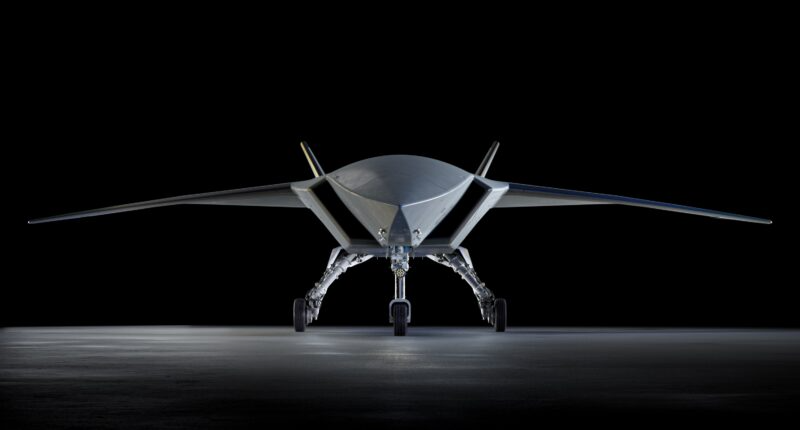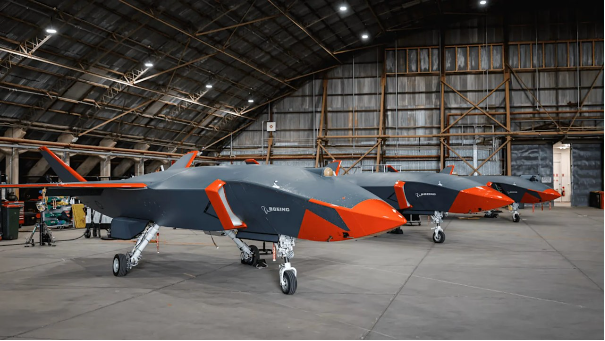
Boeing has unveiled a series of upgrades for its MQ-28 Ghost Bat unmanned combat aircraft, significantly expanding the platform’s payload capacity and operational flexibility.
One of the most notable improvements is a 25 percent increase in wingspan, allowing the aircraft to carry an additional 2,000 pounds (907 kilograms) of fuel, sensors, weapons, or mission equipment.
The upgraded design also introduces a configurable internal weapons bay capable of carrying either two AIM-120 AMRAAM air-to-air missiles or four Small Diameter Bombs, depending on mission requirements.
Modular Mission Architecture
Rather than relying on a fixed configuration, the MQ-28 now incorporates an open-architecture design that enables operators to integrate different payloads, sensors, communication systems, and mission equipment.
A newly developed modular nose section further enhances flexibility by allowing rapid replacement of sensor packages and mission-specific hardware.
According to Boeing, the new capabilities were developed in cooperation with the Royal Australian Air Force and will be introduced to operational aircraft through an ongoing spiral upgrade approach. The company also indicated that the upgrades are available to allied nations interested in the platform.
Beyond-Line-of-Sight Operations
The MQ-28 has also gained satellite-enabled beyond-line-of-sight (BLOS) communications capability, allowing operators to control the aircraft from locations far removed from the immediate combat area.
This capability enables command and control from a variety of platforms, including crewed fighter aircraft, naval vessels, and ground-based command centers equipped with satellite communications.
By separating operators from the aircraft’s operational environment, the system helps reduce the risk of detection and retaliation while maintaining control of the drone during missions in contested airspace.
Boeing Defence Australia Vice President and Managing Director Amy List stated that the maturity of the MQ-28 platform allows the company to continuously adapt the aircraft to evolving operational requirements while reducing risk as it transitions toward operational deployment.
The latest enhancements build on the MQ-28’s existing low-observable design and survivability features, further strengthening its role as a next-generation autonomous combat aircraft capable of supporting a wide range of missions alongside crewed military platforms.
As militaries increasingly pursue loyal wingman concepts and crewed-uncrewed teaming operations, the MQ-28 Ghost Bat continues to emerge as one of the most advanced combat drone programs currently under development.