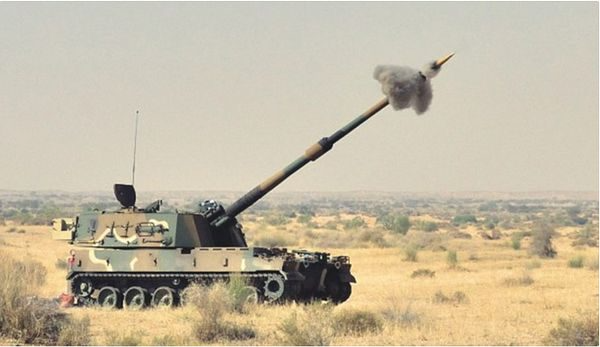
The Indian Army is reportedly preparing to expand its artillery capabilities through the potential acquisition of 300 additional K-9 Vajra self-propelled howitzers in a program estimated to be worth approximately 230 billion rupees ($2.42 billion).
According to reports, a proposal for the procurement is expected to be presented to India’s Defence Procurement Board in the coming days. If approved, the contract would likely be awarded to Larsen & Toubro, which manufactures the K-9 Vajra domestically through a technology transfer agreement with Hanwha Aerospace.
The Indian Army currently operates 100 K-9 Vajra systems, while another batch of 100 units was ordered in 2024. Should the latest procurement proceed, the service’s total fleet could eventually reach 500 vehicles.
Military planners view the expansion as a significant boost to India’s long-range firepower capabilities, particularly along sensitive border regions facing Pakistan in the west and China in the north.
K-9 Vajra Capabilities
The K-9 Vajra is India’s locally adapted version of the South Korean K9 Thunder self-propelled howitzer. The platform was designed to combine long-range precision firepower with the mobility required for operations across a variety of terrain and environmental conditions.
Powered by a 1,000-horsepower engine, the 50-ton artillery system can reach speeds of up to 67 kilometers per hour (41 mph) and has an operational range of more than 360 kilometers (223 miles).
Its 155mm main gun is capable of firing both conventional high-explosive and precision-guided ammunition at targets up to 50 kilometers (31 miles) away. The system can launch three rounds in just 15 seconds and maintain a firing rate of up to eight rounds per minute during short periods of intense engagement.
India selected the K-9 platform in 2015 following extensive field evaluations, during which it reportedly outperformed the Russian 2S19 Msta-S artillery system.
If approved, the new acquisition would represent one of India’s largest artillery procurement programs in recent years and further strengthen the country’s efforts to modernize its land forces with domestically produced defense equipment.