Eyes in Orbit: How the JEWEL Initiative is Securing Europe’s Sovereign Skies
In an era of escalating ballistic and hypersonic risks, France and Germany are taking a stand to protect European airspace. The launch of the JEWEL (Joint Early Warning for a European Lookout) initiative marks a pivotal shift toward strategic independence, ensuring the continent can detect, track, and potentially neutralize aerial threats without total reliance on outside allies.
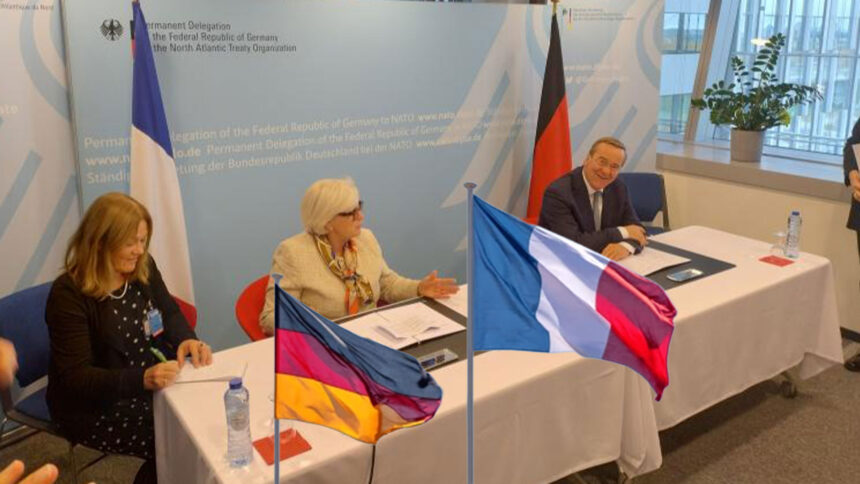
On October 15, 2025, French Minister Catherine Vautrin and German Defence Minister Boris Pistorius formalized this vision by signing a Letter of Intent. This isn’t just about security; it’s about building a European pillar within NATO that stands on its own two feet.
What Exactly is “Early Warning”?
Think of it as a high-tech alarm system that never sleeps. Early warning is the sequence of detecting a launch, calculating its path in real-time, and feeding that data to command centers to trigger countermeasures.
The system operates across two critical dimensions:
- Space-Based Sensors: Satellites equipped with infrared sensors that spot the heat signature of a missile booster the moment it ignites.
- Ground-Based Radar: A network of fixed and mobile radars that track the projectile’s trajectory. This includes Over-the-Horizon (OTH) technology to catch low-flying cruise missiles.
The Space Component: JEWEL’s North Star
The core of this cooperation lies in the stars. Because space sensors provide the earliest possible data—often before a missile even enters radar range—they are the “cornerstone” of the project.
The 2030 Goal: France and Germany aim to have an Initial Operational Capability (IOC) by the early 2030s. This will serve as the foundation for the broader ODIN’S EYE project supported by the European Defence Fund.
Key Technical Features:
- Interoperable Satellites: Both nations will launch geostationary satellites designed to talk to one another seamlessly.
- The “Interoperability Backbone”: A shared digital interface that allows for instantaneous data exchange between national systems.
- Modular Growth: While starting as a bilateral effort, the architecture is designed to welcome other European partners over time.
Why This Matters for Strategic Autonomy
For decades, Europe has looked to U.S. early warning systems for its primary intelligence. While the alliance remains strong, the JEWEL initiative represents a move toward sovereign assets. By controlling the sensors and the data, Europe gains the ability to:
- Attribute Responsibility: Quickly identify who launched a strike.
- Enhance Deterrence: Prove that no launch goes unnoticed.
- Strengthen NATO: Contribute a robust, European-led capability to the Integrated Air and Missile Defence (IAMD) framework.
A Unified Front
This breakthrough is the direct result of the Franco-German Defence and Security Council held in August 2025. It brings together the brightest minds from the French DGA and German defense industries to move from theoretical cooperation to tangible hardware.
The message is clear: Europe is no longer just a spectator in the high-stakes game of missile defense. Through JEWEL, it is becoming a primary player.