Swedish defense company Saab introduced its next-generation passive electronic warfare (EW) sensor, dubbed the Sirius Compact L24R, at the AOC EW Europe symposium held in Helsinki.
Unlike the portable and mobile design of previous Sirius Compact models, the L24R was developed and optimized specifically for integration into fixed infrastructure. The device can be easily adapted to existing poles, rooftops of tall buildings, or wind turbines. Company officials state that this flexibility allows for the establishment of a large-scale, distributed sensor network using existing civilian or military infrastructure.

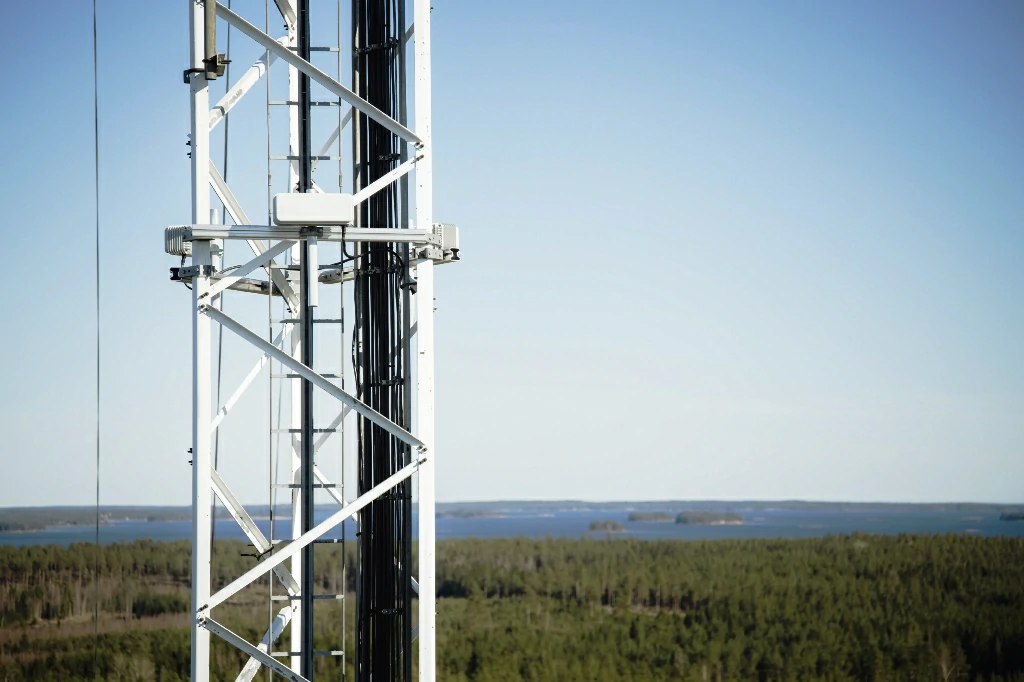
Operating on a remarkably low power consumption of just 65 watts, the sensor requires no external cooling unit and can be activated with a single cable connection.
While a single L24R module can scan a 120-degree sector, using three modules together provides a full, uninterrupted 360-degree surveillance coverage. Additionally, with the new model, the direction-finding (DF) accuracy has been improved to below a 1-degree margin of error — compared to approximately 2 degrees in previous versions.
As the system operates entirely passively and emits no signals of its own, it cannot be detected by enemy radars or electronic intelligence units. Nevertheless, it silently listens to the electromagnetic emissions of target elements, much like a hunter lying in wait.
Operating across a frequency range of 1 to 18 GHz, the system is capable of tracking a wide spectrum of sources — from fighter aircraft radars to civilian aircraft weather radars, from maritime navigation radars to long-range air surveillance systems, and IFF (Identification Friend or Foe) interrogations.
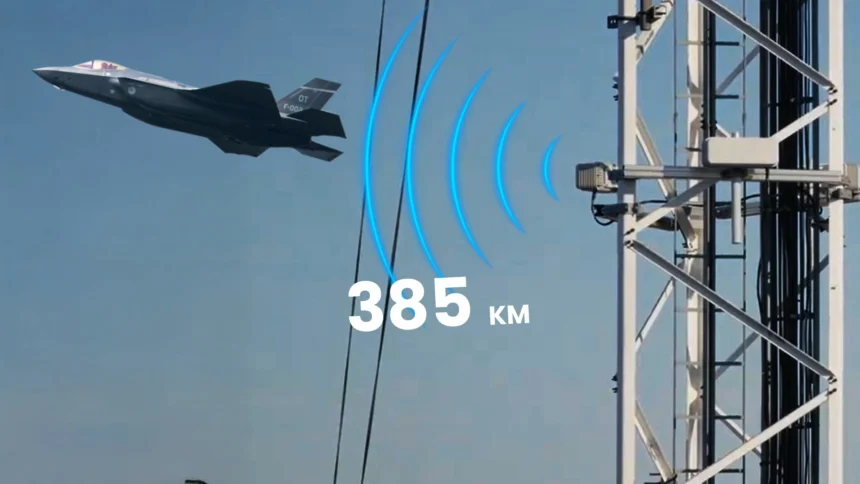
According to a striking test result shared by Saab, the previous version of the system successfully detected a Lockheed Martin F-35 Lightning II stealth fighter jet — with its active radar running — from a distance of 385 kilometers in 2023. Experts emphasize that the key factor here is the aircraft’s radar emissions, noting that any airborne platform operating its radar while remaining above the radar horizon can similarly be detected.