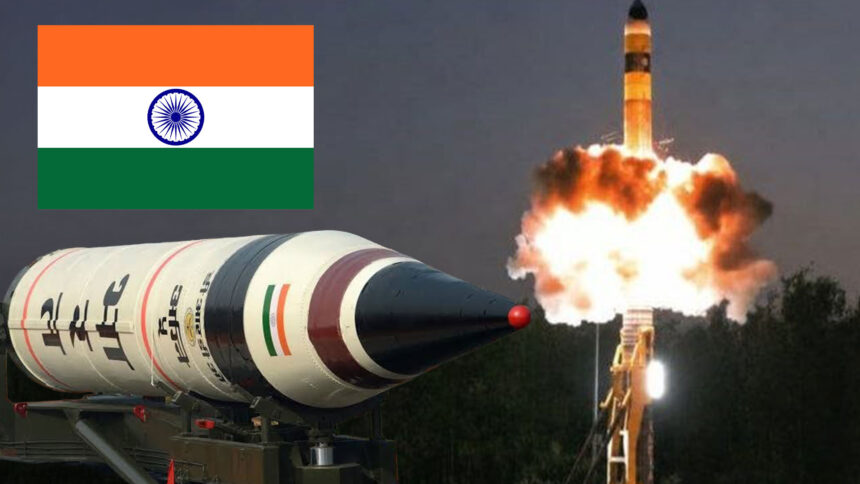
The first flight test of the MIRV-capable Advanced Agni missile was successfully conducted by India’s state-sponsored institution, DRDO.
The test was carried out on May 8 at Dr. APJ Abdul Kalam Island, and the launch resonated widely across the world.
Unlike traditional ballistic missiles, the newly tested version houses multiple warheads within a single carrier body.

Thanks to MIRV technology, once the missile reaches outside the atmosphere, it can release its payloads toward targets that are entirely different and spread across a wide geography.
The greatest advantage of this system is to destabilize enemy air defense systems with an intensive attack and to divide the strength of the defense systems.

Defense industry analysts say that Advanced Agni has made India one of the few countries in the world in this field.
DRDO announced that by analyzing all test data of the system, it met the performance requirements and that mass production will begin.
Range comparison video from Agni-I to Agni-V.
Earlier versions, including Agni-I through Agni-IV, utilized a monoblock design, meaning the missile carried a single warhead to a single target. The Advanced Agni introduces Multiple Independently Targetable Re-entry Vehicle (MIRV) technology. This allows one missile to carry several warheads that can be directed at different geographic coordinates simultaneously, making it more difficult for air defense systems to intercept the entire payload.

The older Agni missiles were primarily short to intermediate-range systems. Agni-I had a range of approximately 700 km, while Agni-IV reached up to 4,000 km. The Advanced Agni is classified as an Intercontinental Ballistic Missile (ICBM), with a range exceeding 5,000 km. This extends its reach significantly beyond the regional focus of the previous models.