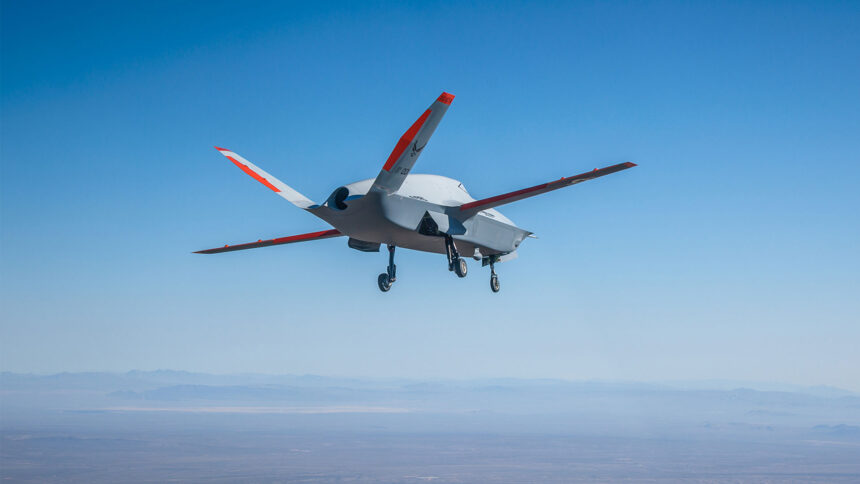
In a milestone that signals the definitive end of the “experimental” era for autonomous aviation, the United States Air Force (USAF) has officially requested nearly $1 billion in its latest budget proposal to begin the initial procurement of Collaborative Combat Aircraft (CCA).
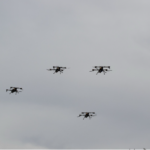
This move, revealed earlier this week during congressional budget hearings, marks a historic pivot from high-tech prototyping to formal fleet integration. The funding is intended to transition the “loyal wingman” concept—where autonomous drones fly alongside manned fighter jets like the F-35 or the upcoming NGAD—into a tangible, mass-produced reality.
The Shift to “Decision Dominance”
The procurement request is part of a broader strategic realignment within the Pentagon. Defense analysts suggest this isn’t just about buying new hardware; it’s about a fundamental shift in how the U.S. intends to maintain air superiority.
Mass and Attrition: Unlike the ultra-expensive, “exquisite” manned platforms, CCAs are designed to be “affordable mass.” They allow the Air Force to expand its presence in contested airspace without risking human pilots in every airframe.
AI Integration: The funding will specifically target the finalization of autonomous flight control software and the “sensor-to-shooter” pipelines that allow these drones to make split-second tactical decisions under human oversight.
Industrial Base Expansion: By moving toward production, the USAF is signaling to contractors like Anduril, General Atomics, and Lockheed Martin that the “autonomous gold rush” has reached the commercialization phase.
Beyond the First Island Chain
The timing of this request aligns with the newly released 2026 National Defense Strategy (NDS), which emphasizes “Fortress America” and a sharp focus on deterrence in the Indo-Pacific.
Defense experts note that the CCAs are the mechanical answer to the “First Island Chain” challenge. With their ability to act as forward-deployed sensors, electronic warfare nodes, or missile carriers, these robotic wingmen are expected to complicate the defensive calculus of any regional adversary by saturating the skies with targets that are too cheap to ignore but too dangerous to overlook.
The “Replicator” Influence
The procurement push also mirrors the success of the Pentagon’s “Replicator” initiative, which sought to field thousands of autonomous systems across multiple domains. This week’s $1B request suggests that the Air Force is confident enough in the technology’s maturity to move it out of the “innovation labs” and onto the active-duty flight line.
“We are moving past the ‘what if’ stage of autonomous warfare,” noted one senior defense official during the hearing. “This budget line is the proof that the robotic wingman is no longer a sci-fi concept—it’s a production requirement.”
Looking Ahead: If approved by Congress, the first operational CCA units could be integrated into active squadrons as early as 2028, forever altering the geometry of the modern battlefield and setting a new standard for global air forces.