The current landscape of the conflict between Israel, the United States, and Iran has shifted from an intense period of direct kinetic engagement into a punishing war of economic and maritime attrition. While major airstrikes have largely subsided under a series of fragile ceasefires, the regional environment remains defined by a unprecedented dual blockade that has paralyzed global energy markets and effectively severed the Persian Gulf from traditional trade routes. The strategic center of gravity has moved to the Strait of Hormuz, where the Iranian leadership under the new Supreme Leader has maintained a resolute refusal to restore freedom of navigation, viewing the maritime chokehold as their primary leverage against continued Western economic pressure. This stalemate is further complicated by the political maneuvering within the United States, where the administration has officially categorized hostilities as terminated to navigate domestic legal constraints, even as naval assets remain locked in a high-stakes standoff with Iranian forces.
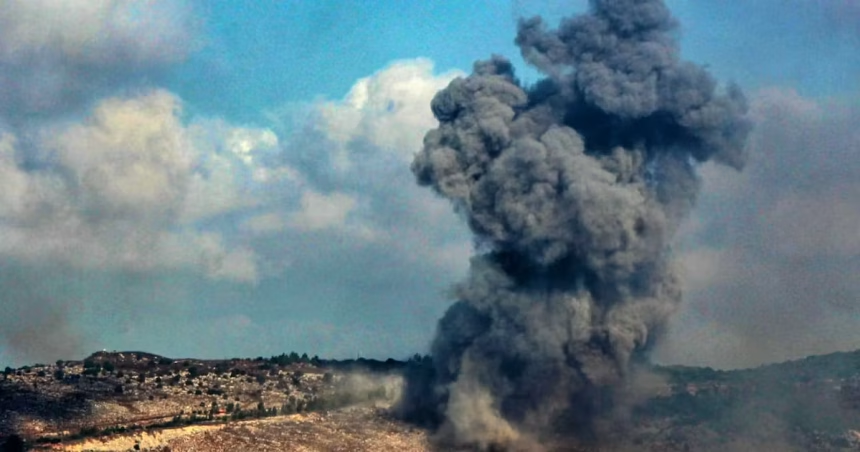
On the northern front, the cessation of hostilities between Israel and Hezbollah remains exceptionally precarious, marked by persistent low-level skirmishes and deep distrust that threatens to collapse before the scheduled expiration of current truce agreements. Israeli defense planners continue to signal that a return to broad military operations is imminent if the security vacuum in southern Lebanon is not filled by a more capable central authority. Meanwhile, the geopolitical alignment of the broader Middle East is undergoing a fundamental transformation, exemplified by the United Arab Emirates’ recent departure from major oil cartels and its pivot toward a more independent, security-first foreign policy. This fragmentation among Gulf states indicates a breakdown in traditional regional alliances, as nations closer to the friction points demand more aggressive deterrent measures that their neighbors are hesitant to support.
The humanitarian and economic toll of this protracted state of uncertainty continues to mount, with global oil supplies remaining suppressed and regional infrastructure suffering from the cumulative damage of the preceding months of war. Despite the absence of large-scale missile exchanges at this moment, the underlying motivations for the conflict—Iran’s nuclear trajectory, Israel’s requirement for long-term border security, and the struggle for regional hegemony—remain entirely unaddressed by current diplomatic efforts. This creates a dangerous equilibrium where the lack of formal communication channels and the hardening of ideological positions in both Tehran and Jerusalem make any localized incident a potential catalyst for a renewed and even more devastating phase of total war. The international community is left observing a region where the traditional rules of deterrence have been rewritten, and where the line between a temporary pause and a catastrophic escalation has never been thinner.