Türkiye is strengthening its defense industry footprint in Central Asia through a strategy that combines unmanned aerial vehicle exports, technology transfer agreements, local manufacturing, and long-term industrial cooperation, with Kazakhstan emerging as a key regional partner.
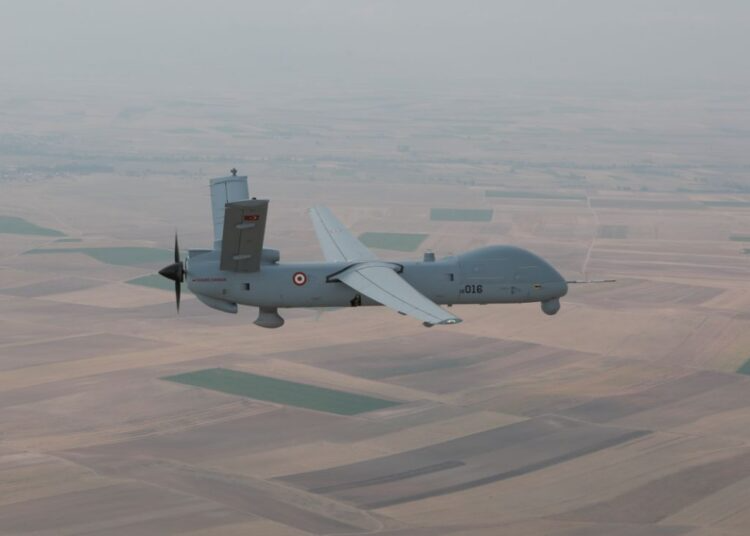
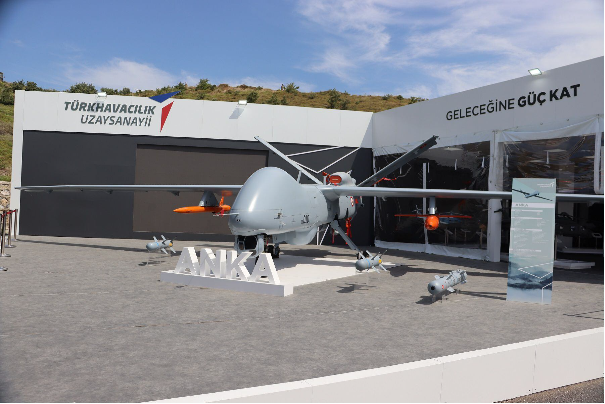
At the center of the initiative is the ANKA unmanned aerial vehicle developed by Turkish Aerospace Industries (TUSAŞ). The two countries have agreed to establish joint production and maintenance capabilities for the platform in Kazakhstan, marking the first overseas manufacturing program for the ANKA system.
From Procurement to Industrial Cooperation
Defense cooperation between Ankara and Astana in the UAV sector dates back to a military agreement signed in 2021 that included provisions for collaboration on reconnaissance and armed drone technologies, operational coordination, and military knowledge sharing.
What initially began as discussions focused on drone procurement gradually evolved into a broader industrial partnership. In 2022, TUSAŞ and Kazakhstan Engineering signed a memorandum of understanding covering drone production, maintenance, repair services, and technology transfer.
The project received renewed momentum during Turkish President Recep Tayyip Erdoğan’s recent visit to Kazakhstan, where he and Kazakh President Kassym-Jomart Tokayev oversaw the signing of multiple bilateral agreements. Among them was a framework agreement establishing a joint venture dedicated to the production and support of ANKA unmanned aircraft.
Under the arrangement, Kazakhstan is expected to participate not only in assembly activities but also in maintenance, logistics, personnel training, and operational support, helping build a sustainable local ecosystem around the platform.
ANKA’s Capabilities
The ANKA is a medium-altitude, long-endurance unmanned aerial vehicle designed for intelligence, surveillance, reconnaissance, and strike missions.
The platform entered service with the Turkish Armed Forces during the 2010s and has since been employed in a variety of operational environments. It is currently used by multiple Turkish security and military organizations for border monitoring, reconnaissance, target acquisition, and counterterrorism missions.
With a wingspan of approximately 17.5 meters and a maximum takeoff weight of around 1,700 kilograms, the aircraft can remain airborne for more than 30 hours and operate at altitudes approaching 30,000 feet.
The UAV can be equipped with electro-optical and infrared sensors, synthetic aperture radar, moving target tracking systems, satellite communications equipment, and signals intelligence payloads. Satellite-controlled variants provide beyond-line-of-sight operational capability, extending the platform’s reconnaissance reach.
Armed versions can deploy precision-guided munitions such as the MAM-L and MAM-C smart bombs developed by Roketsan.
A Broader Export Strategy
The Kazakhstan project reflects a broader evolution in Türkiye’s defense export approach. Rather than focusing solely on equipment sales, Ankara increasingly promotes long-term industrial partnerships that include local production, maintenance infrastructure, technical training, and technology-sharing arrangements.
Similar models have been pursued in other regions, including the Gulf, where Turkish defense companies have signed agreements involving local manufacturing and industrial cooperation for unmanned systems.
Türkiye has also expanded drone-related defense ties across Central Asia, with countries such as Turkmenistan and Kyrgyzstan acquiring Turkish-made UAVs as regional demand for surveillance and strike capabilities continues to grow.
The ANKA partnership further strengthens Türkiye’s position in a region historically dominated by Russian military equipment and increasingly targeted by Chinese defense suppliers.
As Turkish defense manufacturers continue to expand their international reach, the Kazakhstan initiative highlights Ankara’s growing emphasis on building long-term industrial ecosystems around its defense technologies rather than relying solely on traditional export sales.